
Beyond Repatriation: The Difficult Reality Facing Nigerians Back From South Africa
After fleeing South Africa tensions, Nigerian returnees confront a tougher reality at home as they search for jobs and stability.

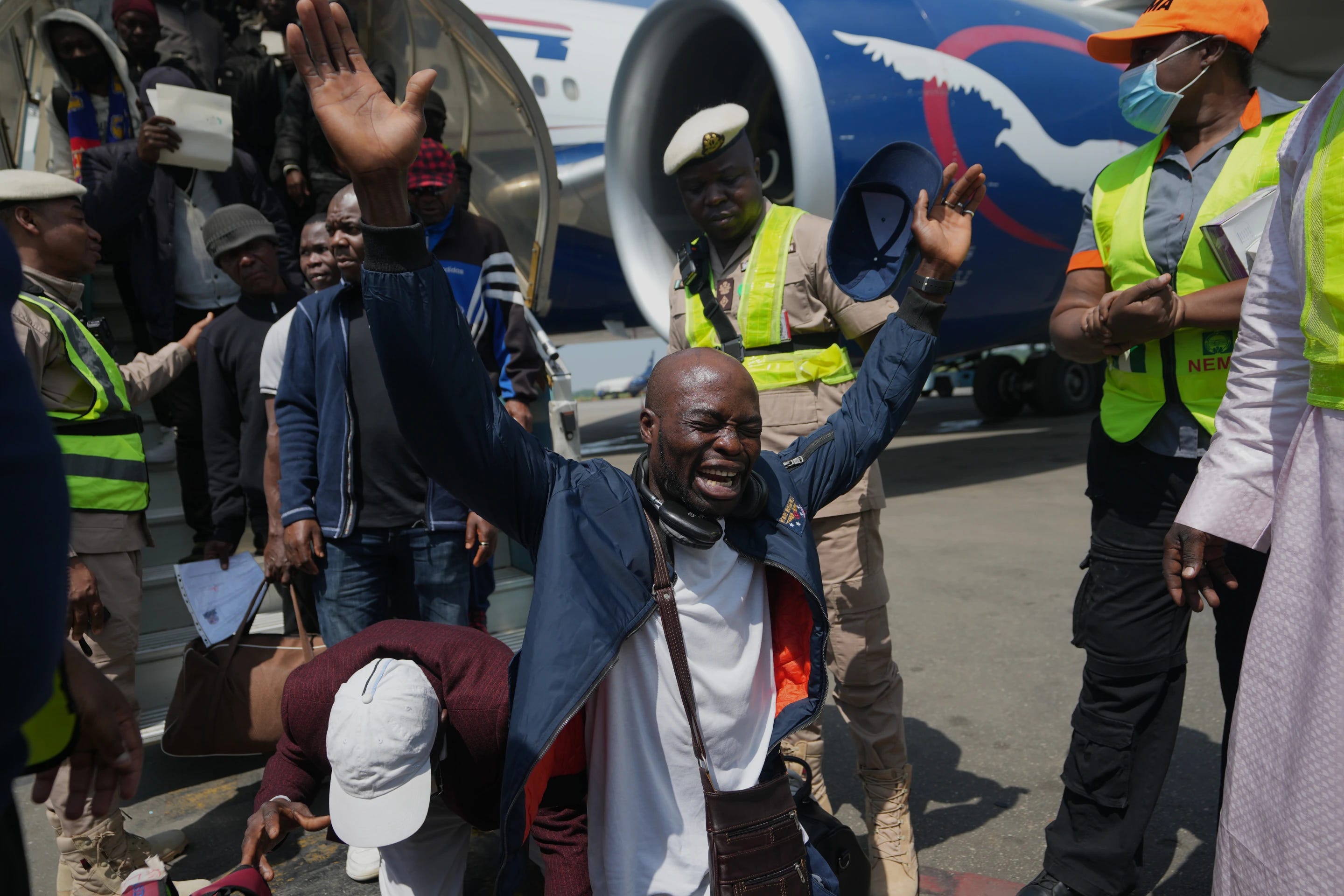
A journey that was supposed to mark a fresh start has left Nigerian migrant Iniebong James caught between relief and uncertainty. After years of building a life in South Africa, the 52-year-old returned home with little more than memories of the opportunities he once chased and concerns about what comes next.
James was among the first group of Nigerians repatriated from South Africa on June 11 after growing fears over rising anti-immigrant sentiment and attacks targeting foreign nationals. While stepping onto Nigerian soil brought him a sense of safety, adjusting to life back home after a decade away has become another challenge.
He left Nigeria in 2016 after the haulage company where he worked as a truck driver collapsed during the country’s first recession in two decades. With unemployment rising and prolonged power outages affecting daily life, James decided to seek better prospects in South Africa.
Arriving on a six-month visitor’s visa, he eventually settled in the Eastern Cape Province, where he worked as a car mechanic despite no longer having legal permission to remain in the country. He managed to build a livelihood until May, when he was attacked during protests linked to growing hostility toward immigrants, he told The Associated Press.
The incident came amid renewed anti-migrant demonstrations in South Africa, where some groups have called for undocumented foreigners to leave the country. The unrest has raised concerns among migrant communities, prompting several African governments to arrange repatriation flights for their citizens.
South Africa has historically attracted migrants from across Africa, including many Nigerians, because of its stronger economy and infrastructure. However, the country has also experienced repeated outbreaks of xenophobic violence, with some South Africans accusing foreigners of contributing to unemployment, crime and pressure on public services.
James said he survived in South Africa by paying community police officers 200 rands ($12.14) every week to allow him to operate his mechanic shop. He also claimed he paid immigration officers on two occasions after being arrested. The AP could not independently verify the claims.
Although he is happy to be back and regain his “freedom,” James fears the economic situation he left behind has become even more difficult.
“I would submit my CV if anybody can accept me, but I am still hoping for the government to help me (with a job),” he said.
His decision to return came after Nigeria’s government announced a repatriation program for citizens affected by the rising tensions in South Africa.
However, the Nigeria James returned to is facing deeper economic pressures. Since 2023, President Bola Tinubu’s administration has introduced major reforms, including the removal of decades-old fuel subsidies and allowing the naira’s value to be determined by market forces.
The changes have contributed to rising living costs, with inflation affecting households across the country. When James left Nigeria in 2016, fuel cost 85 naira per liter ($0.1). By the time he returned, the price had climbed to 1,400 naira per liter ($1.03).
“Everything is too expensive,” he said.
The Nigerian government has promised that returnees will “receive the appropriate assistance and support before being reunited” with their families. However, the Ministry of Foreign Affairs has not provided details on long-term plans for helping those who have come back.
Margaret Monyani, founder of Johannesburg-based migration think-tank OLAM Africa Research Institute, said returning migrants often face complex realities beyond simply arriving home.
“Reparation is not transformation,” she said. “Returning is not always as straightforward as it sounds. People just think, go back home and start again. No, what is home?”
Omotola Adeniyi knows that uncertainty. She moved to South Africa in 2015 at the age of 8 to join her mother and later struggled to find opportunities after completing high school.
“After I finished high school, that’s when I saw real life because everywhere I looked for a job, all I could get was, ‘No, we don’t want to employ foreigners,’” Adeniyi said.
She had planned to save for a ticket back to Nigeria but could not afford the fare. Eventually, she accepted Nigeria’s offer of a flight home. After spending 11 years in South Africa, she said returning has been difficult because home no longer feels the same.
The recent protests have triggered diplomatic responses from governments across Africa, including Nigeria, Ghana and Malawi, which have returned some of their citizens and raised concerns with South African authorities.
Nigeria’s Minister of Foreign Affairs, Bianca Odumegwu-Ojukwu, delivered a message to James and other returnees after their arrival.
“The price of your peace, and the safety of your children, is worth any sacrifices you have to make, or any assets you have to leave behind when fleeing a conflict zone or hate-infested environment. Survival is the noblest form of vengeance,” she said.
Despite the challenges, migration experts say South Africa remains a preferred destination for many Africans because of its economic opportunities and infrastructure.
“It doesn’t mean South Africa has the perfect institutions, but they’re working to a large extent,” Monyani stated.